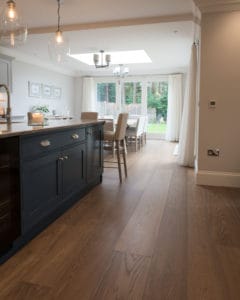
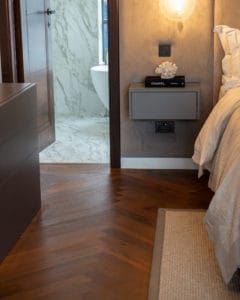
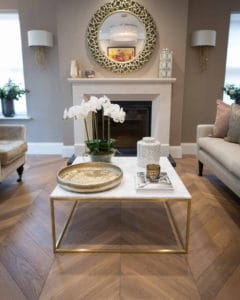
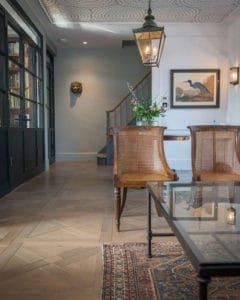
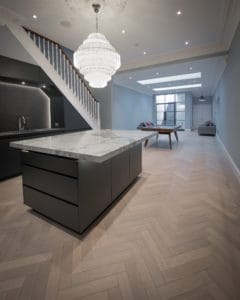
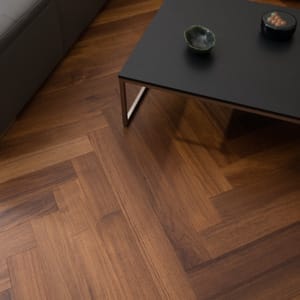
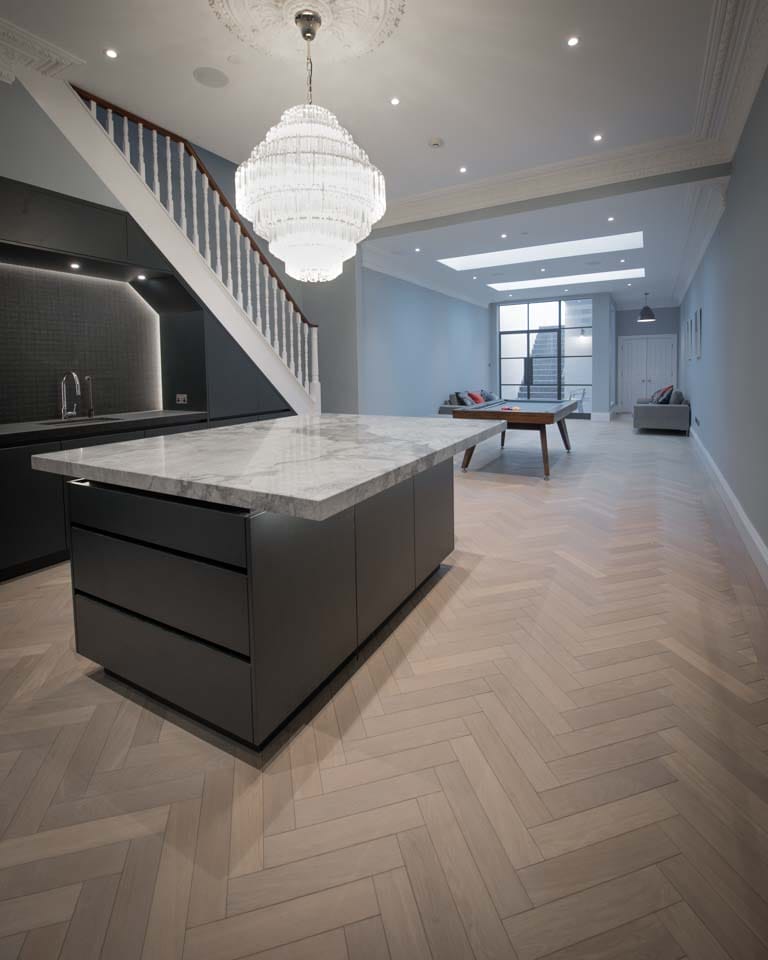
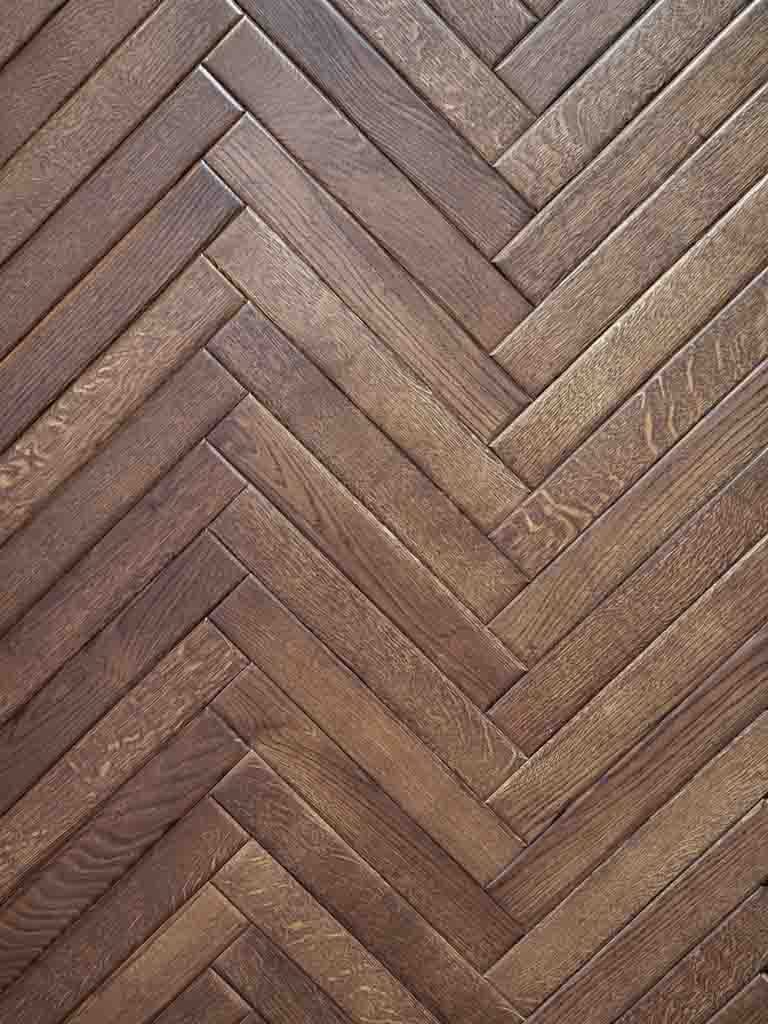
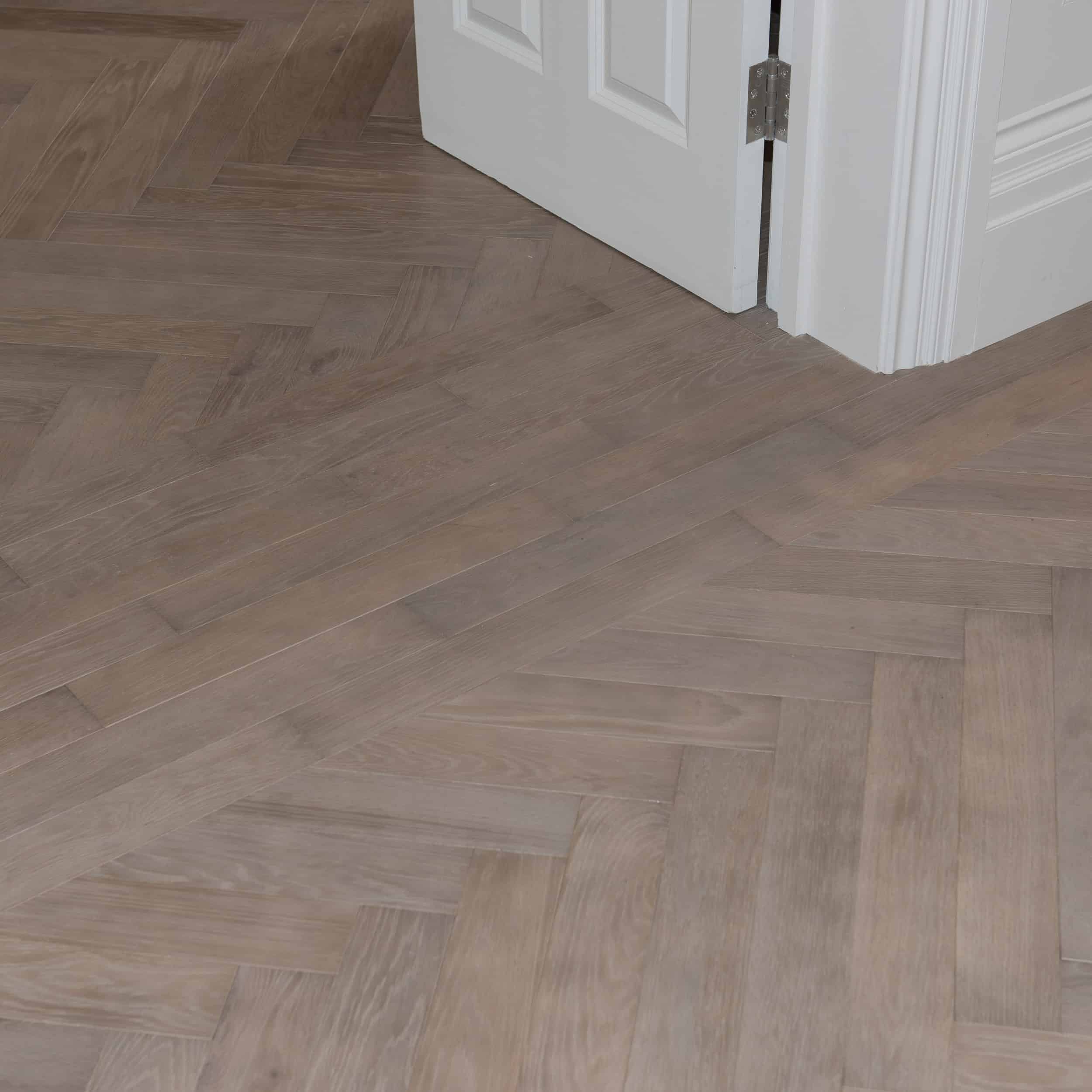
The word herringbone comes from the bones of a herring fish. In Italy, it is called ‘Spina Pesci’, or the spine of a fish.
Herringbone design uses equal-size wood pieces set at 90° to each other to make two lines. The pieces are called battens in solid wood 10mm overlay floors, or blocks in 20mm solid wood.
This simple pattern has many options, and each one gives a different look. This guide helps with herringbone floors, herringbone oak flooring, and other wood floors. Other shapes can be used, such as angled shapes (Chevron Parquet) and hexagons. But with so many rectangle options, this guide focuses on rectangle shapes.
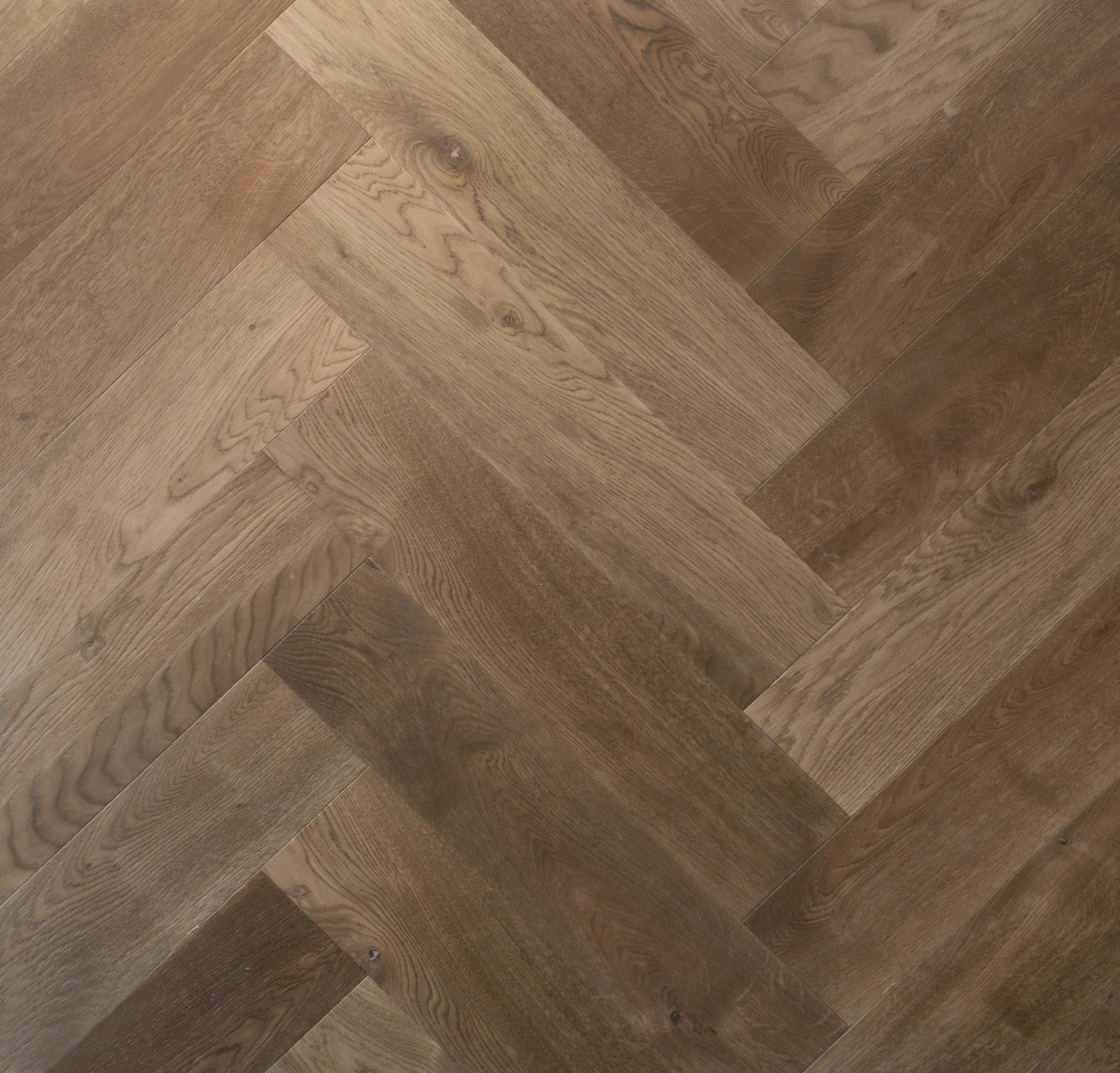
Traditionally, the length is 5 times the width, or 5:1. This helps the pattern repeat well. Five pieces will always make one full repeat. But in a standard herringbone pattern, the length can be any size. Harley Oak Herringbone Parquet.
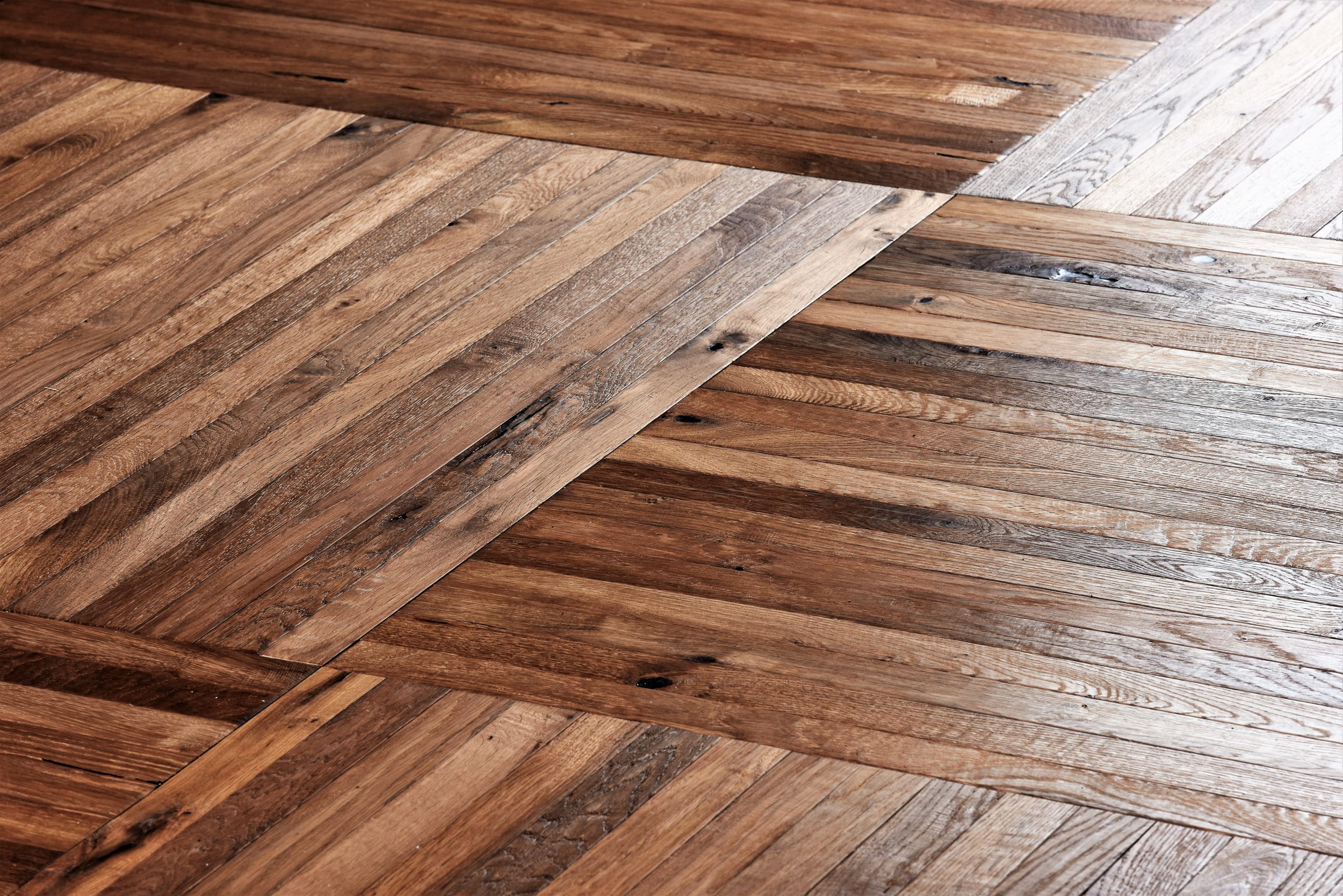
Harley Oak Herringbone Parquet
What size herringbone is best?
This is the first choice that changes the final look. It matters when planning herringbone style flooring.
Extra narrow — A unique look uses fairly narrow widths at 45-65mm and longer lengths of 400-900mm
70 x 350mm — On the smaller side, 350 x 70mm is a popular choice. It works well in small and medium rooms. It is often used in school halls and other business spaces because it is cheaper.
90 x 450mm — This is a classic size and gives a more premium look. It works well in small and large spaces.
90 x 700mm — Slightly longer, with a more premium look. It works well in all room sizes. It is a preferred size in engineered herringbone flooring because it is cheaper to make.
Oversized herringbone — 120 x 600, 135 x 700mm, or 150 x 700mm. These sizes are seen as oversized and give a slightly more modern look. They are ideal for medium and large spaces.
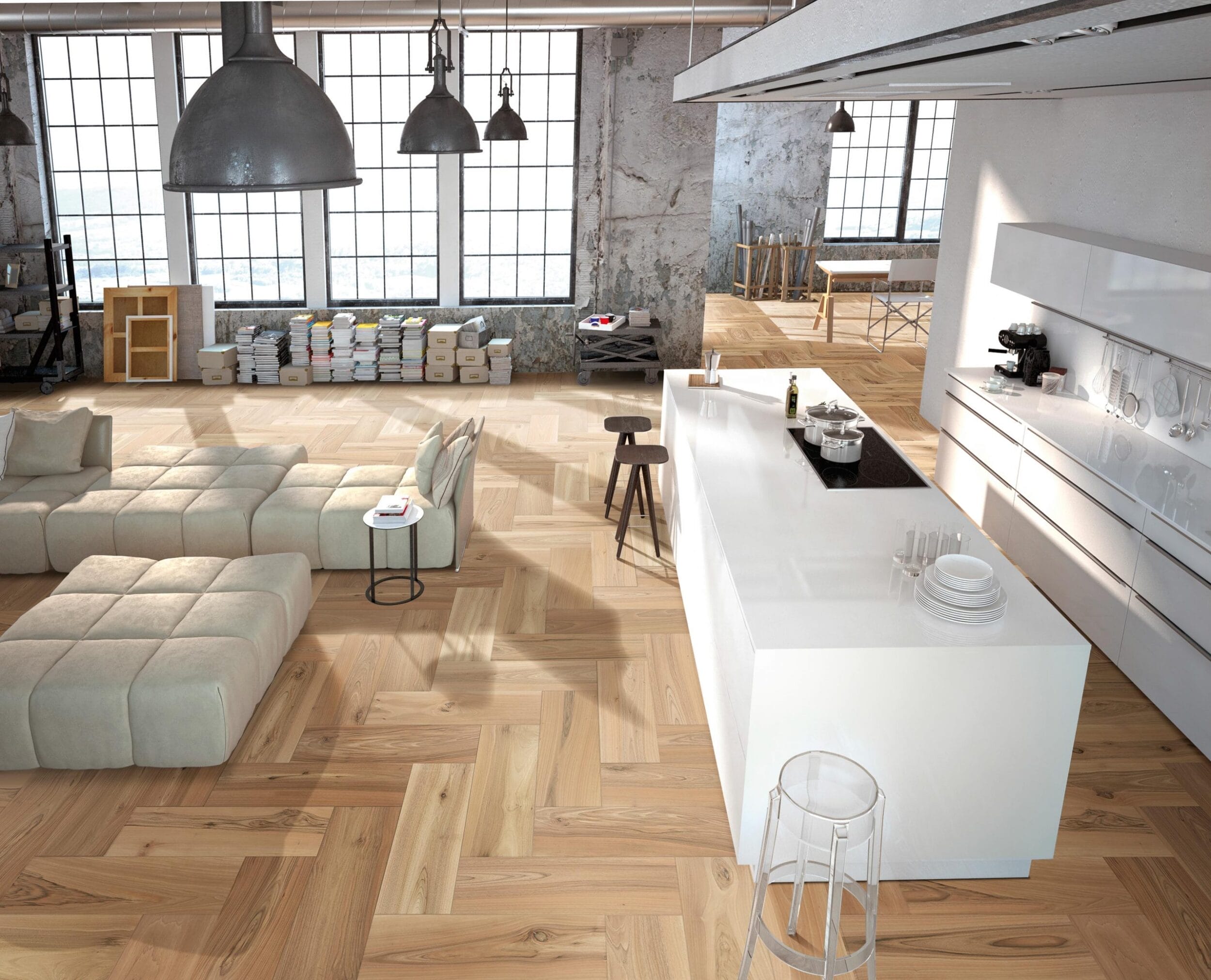
Extra large sized herringbone — 180 x 900 or 240 x 720mm. This extra large size gives a modern look and works well in large spaces, such as an open-plan living and kitchen space.
What herringbone designs can you make with parquet battens?
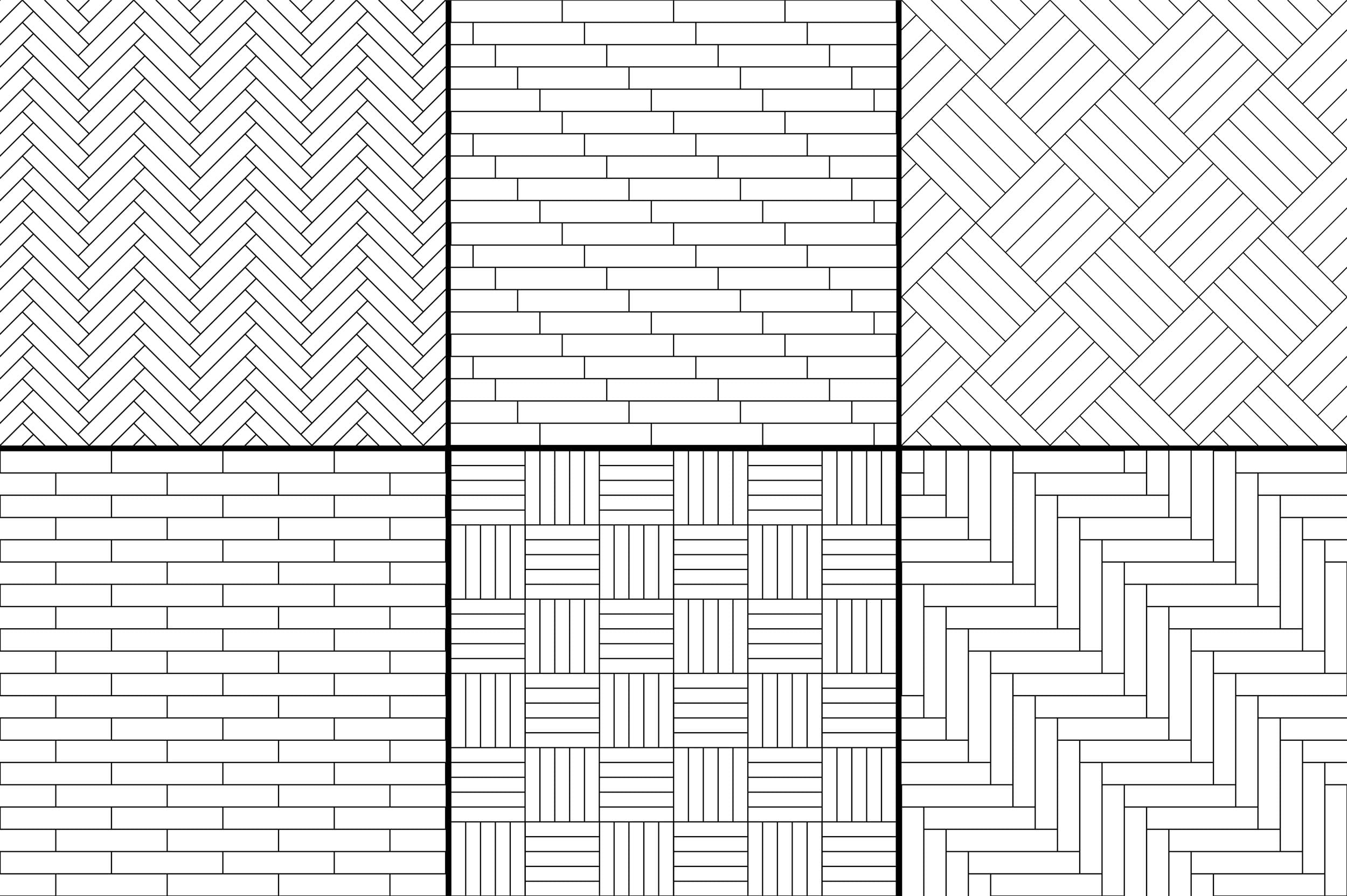
Single herringbone — the standard design alternates the battens left and right.
Diagonal herringbone — the first row runs parallel to a wall. This gives a unique and attractive look, and it can work well in small and large spaces.
2 colour herringbone — using 2 colours can create a strong design.
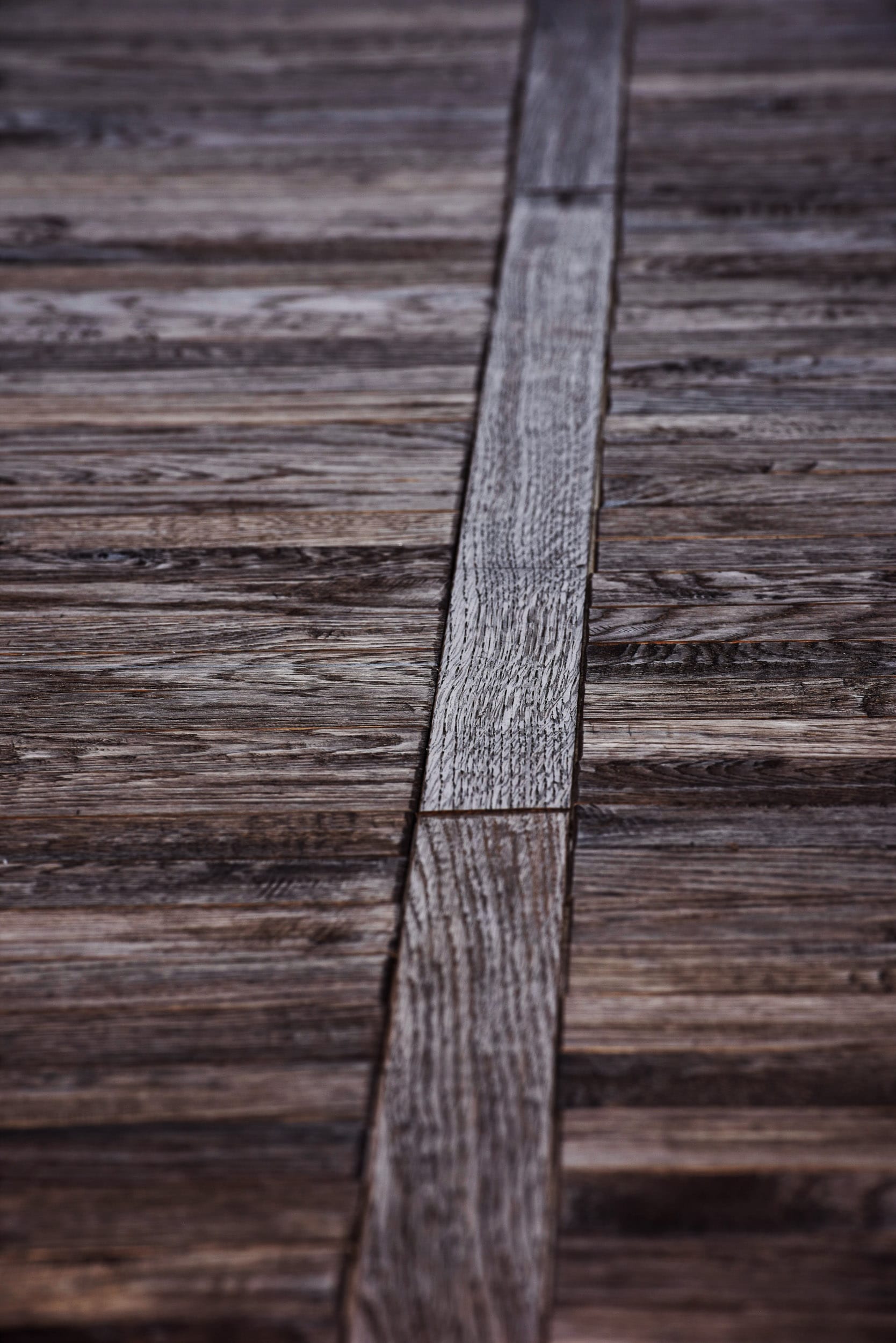
Double herringbone — this design needs 2 battens to alternate at the same time.
Ladder pattern — laying the battens flat in a line, with a single line of battens between each row.
Brick pattern — staggering the battens in a single row.
Basket pattern — this needs battens with lengths that are multiples of the width, such as 3:1, 4:1, or 5:1. A basket pattern can be installed square to the room or on the diagonal.
Engineered wood herringbone or solid wood herringbone?
Parquet flooring can be made in 3 formats:
Solid wood overlay parquet — overlay parquet is the oldest format and the most traditional way to install parquet. It is made from solid wood in about 9-10mm battens. The installation method is seen as the purest form of wood floor installation, and it has been used for centuries. It also takes the most skill and patience from the client. This is not a job to rush. Strict site conditions need to be met to ensure humidity is stable and all wet trades have been completed. When conditions are met the timber needs to acclimatise for 1-2 weeks before fitting. Once fitted, the timber needs time to settle before any filling, final sanding, priming, or finishing can be done. See fitting instructions according to NWFA
Engineered wood herringbone — demand for underfloor heating, factory-finished colours, and faster project times has made this the most popular type of parquet. It is a strong choice for engineered herringbone flooring.
Solid wood block parquet — this is usually 18-20mm thick and often has a tongue and groove profile. We think this type of herringbone style flooring is not needed. Thicker blocks can move more, so they are more likely to expand and shrink and leave gaps between blocks. Thicker blocks do not always last longer. On a tongue and groove block, the wear layer reaches only to the tongue, giving a maximum of 8-10mm. That is no more than a 10mm overlay floor, and the overlay floor is more stable.
Direction to lay for good herringbone design
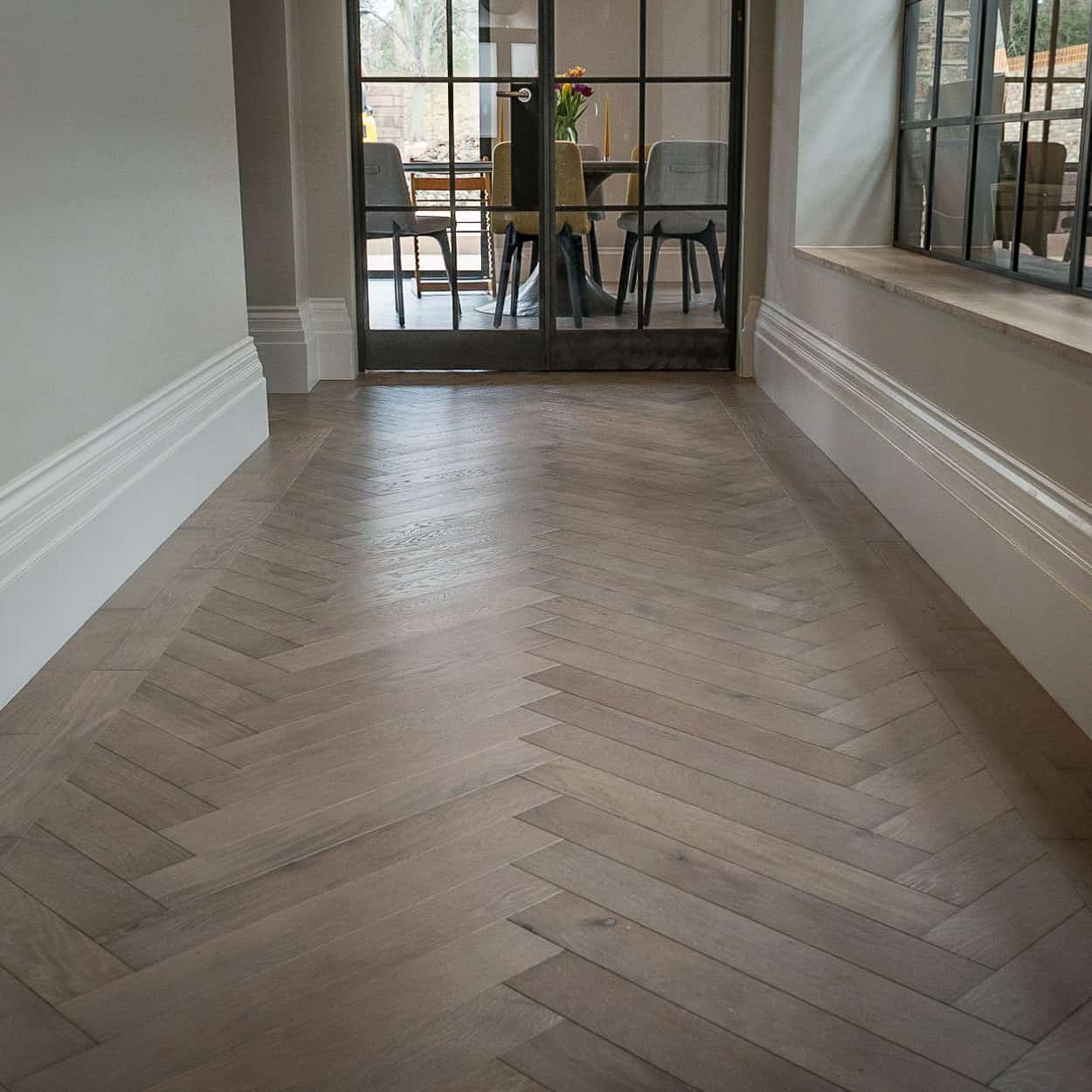
The direction of the pattern matters. Look for a focal point to help you decide, such as a fireplace, double doors, a bay window, or the shape of the room. Herringbone often looks best along the length of the room. But if you have large patio doors that look out to a garden, it may work better to point the pattern that way.
Where to start laying parquet floors
You need to decide where to start the design. Your first row should be centred on a focal point, such as the middle of a bay window or fireplace. Think about how the starting point will affect the rest of the room. It may work better to centre the pattern in the middle of the room so you do not end up with small pieces at the side.
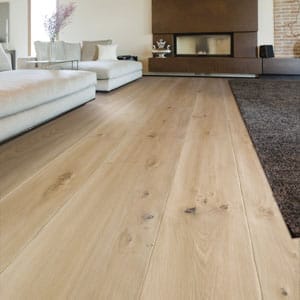
Riva Oak
Do you need to have a border with parquet floors?
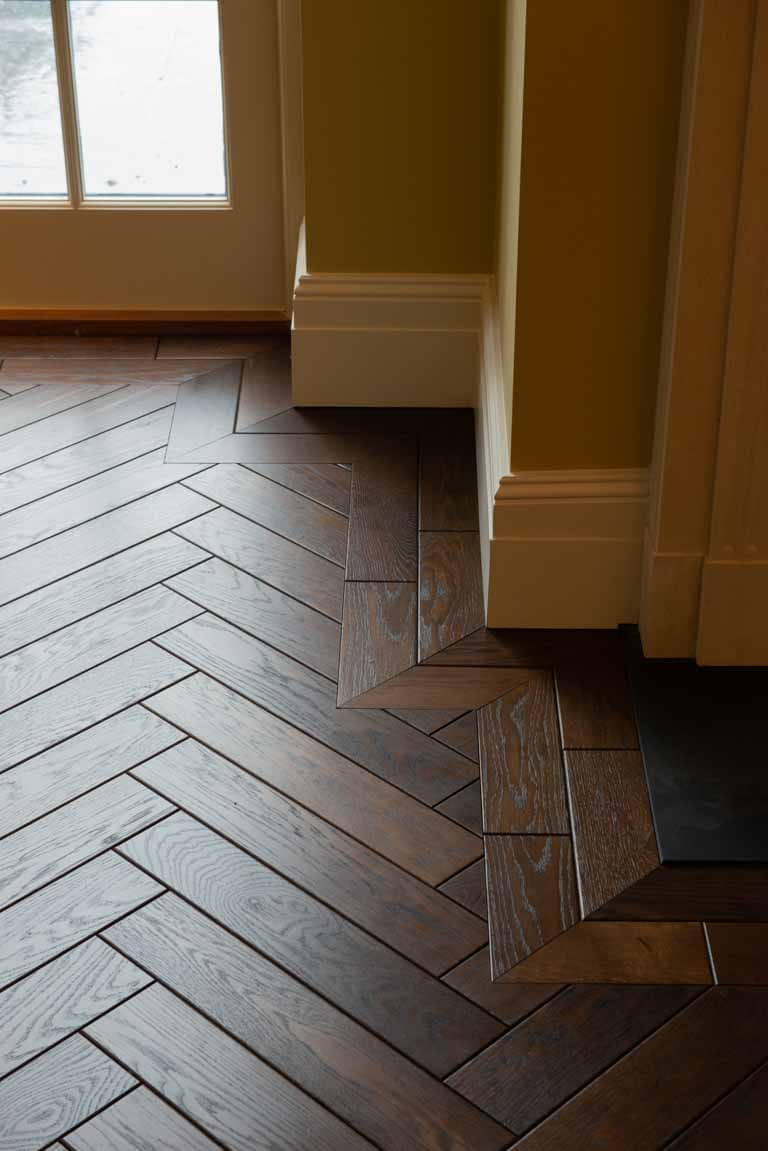
Parquet borders do more than provide a decorative feature. They also help control the design. If you are fitting floors in more than one room and there are no borders or thresholds, think about the effect on those rooms too. Remember, houses rarely have straight walls or rooms that are lined up in exactly the same way. Without a border, the pattern will flow into the next room and may not line up with a focal point there. It may also end up out of line with a wall.
A parquet border lets you choose the direction and starting point for each room, giving you full control over the design.
Design options for parquet borders include:
Single line border — using a single line border with battens parallel to the walls
2 line border — using 2 rows of battens parallel to the walls. A 2 line border can hide uneven walls better, because the first row to the wall takes out some of the variation while the inner row stays as a full batten.
Plank border — using a long wood plank to create the border
Ladder or bookend — turning the battens inwards to make a large border. This works well in larger rooms.
Inset strips — inset strips such as brass, or lighter or darker timber strips, give an attractive effect.
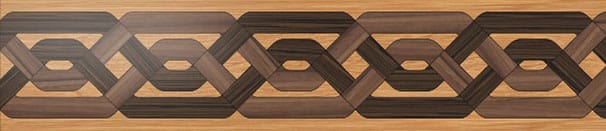
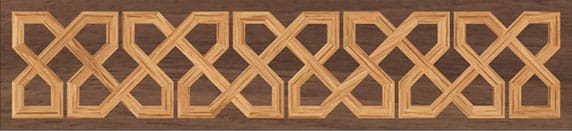
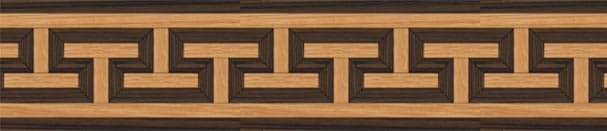
Decorative parquet borders — the options here are wide and varied. Choices include Greek key border, lattice, and intricate marquetry designs.